
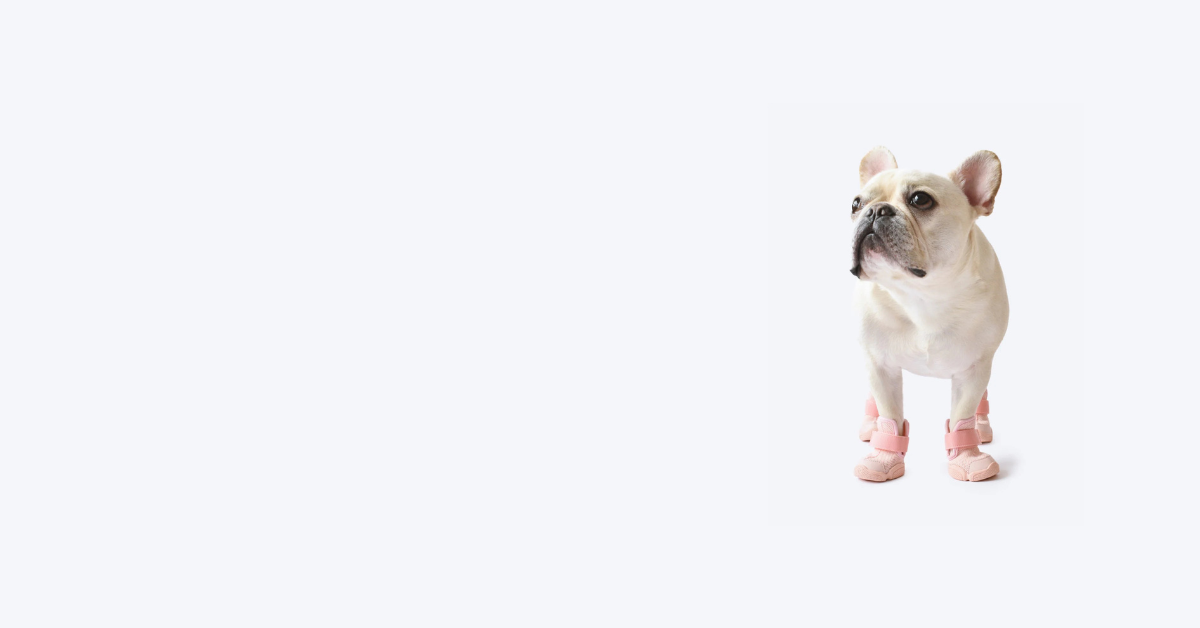
Small dogs are not scaled-down big dogs. Their anatomy is different. Their vulnerabilities are different. And most pet industry advice — written for Labradors and Golden Retrievers — doesn't account for what happens when a dog weighs 4kg instead of 40.
This guide connects anatomy to movement to the products your dog uses every day. It explains why certain choices matter more for small dogs, and why we curate the way we do.
This isn't veterinary advice. It's the thinking behind what we stock — and what we don't.
How to use this guide: Each section links to relevant collections and our Size & Fit Guide. Read what's relevant to your dog, or work through it all. If something raises a concern, consult your vet.
Neck & Trachea Safety in Small Dogs
Neck & Trachea Safety in Small Dogs
Why Small Dogs Are More Vulnerable at the Neck
Small dogs — particularly toy breeds — have narrower tracheas, more delicate cartilage, and less body mass to absorb pressure. What feels like a gentle tug to a Labrador can compress a Chihuahua's airway.
Tracheal collapse and sensitivity are disproportionately common in small breeds. Yorkies, Pomeranians, Chihuahuas, and Maltese are especially prone. The condition is often genetic, but external pressure accelerates damage.
This is why neck safety isn't optional for small dogs. It's foundational.
Collar Pressure vs Chest Distribution
When a dog pulls on a leash attached to a collar, force concentrates on the throat. For a 25kg dog, this might cause momentary discomfort. For a 3kg dog, it compresses the trachea against the spine.
Repeated pressure — even low-level, everyday pulling — creates cumulative strain. Coughing, gagging, and breathing difficulty during walks are warning signs, not personality quirks.
Collars are fine for ID tags. They're not ideal for leash attachment on small dogs.
Why Y-Shaped Harnesses Matter
A Y-shaped harness distributes force across the chest and ribcage, bypassing the throat entirely. The front straps form a Y around the chest rather than crossing over the shoulders or pressing on the neck.
This design matters because it allows full shoulder movement while redirecting pressure away from vulnerable areas. For toy breeds with tracheal sensitivity, it's not a preference — it's protection.
But fit still matters. A poorly fitted harness — too loose, too tight, or incorrectly positioned — can restrict shoulders or shift pressure back to the neck. Measure properly and check that the Y sits on the chest, not the throat.
→ Shop Walk Collection
→ Size & Fit Guide: Chest & Neck Measurement
Hardware Weight & Natural Movement
Hardware Weight & Natural Movement
Why Weight Matters More Than Strength for Small Dogs
Most leash hardware is designed for strength. The assumption is that a dog might pull hard, lunge, or bolt — so the clasp needs to hold.
For small dogs, this logic is backwards.
A 4kg dog doesn't generate enough force to challenge even lightweight hardware. But a heavy clasp — designed for a 30kg dog — creates constant downward pull on the collar or harness attachment point. That weight sits on your dog's neck or chest with every step.
Strength isn't the goal. Proportional weight is.
Leash Width, Clasp Size & Gait
A wide, heavy leash with an oversized clasp changes how a small dog moves. The weight pulls forward and down, encouraging a lowered head position. Over time, this affects posture and gait — particularly in dogs under 5kg.
The effect is subtle but cumulative. You won't see it in a single walk. You'll see it over months: a dog who moves less freely, tires more quickly, or resists the leash altogether.
For toy dogs (2–4kg), leash width should be around 6mm. For dogs 4–8kg, 8–10mm works well. Above 8kg, 10mm is usually sufficient. The clasp should feel almost weightless in your hand — if it feels substantial to you, it's heavy for your dog.
Choosing Scaled Hardware for Dogs Under 12kg
What to look for:
- Small, lightweight clasps proportional to your dog's size
- Balanced weight distribution (the clasp shouldn't outweigh the leash)
- Smooth movement without stiffness
What to avoid:
- Oversized carabiners or climbing-style clips
- Heavy swivel hooks designed for large breeds
- Bulky hardware marketed as "extra secure"
Security comes from proper fit and reliable materials, not from mass.
Spinal Health, Gait & Proportion
Spinal Health, Gait & Proportion
Why Proportion Matters More Than Weight Alone
Two dogs can weigh the same but move completely differently. A 6kg Dachshund and a 6kg French Bulldog have different spinal structures, leg lengths, and balance points. Products that work for one may restrict the other.
When harnesses, clothing, or accessories don't account for proportion, they alter gait. A dog compensates — shifting weight, shortening stride, or moving asymmetrically. Over time, this compensation creates strain.
Small dogs already work harder to cover ground. Poorly proportioned gear makes it worse.
Long-Bodied Breeds: Dachshund, Corgi, Basset
Long-backed dogs carry their weight differently. Their spines are under more stress, and their balance point sits further back than in compact breeds.
For these dogs:
- Harness fit should prioritise chest girth over back length
- Avoid rigid or bulky materials that restrict spinal flexion
- Clothing should allow full extension without pulling at the shoulders or hips
The goal is support without restriction. A well-fitted harness on a Dachshund should feel like it disappears — not like it's holding them in place.
Short-Legged, Compact Breeds: French Bulldog, Pug
Compact breeds with short legs face different challenges. Ground clearance is limited. Anything that hangs, drags, or adds bulk below the chest interferes with movement.
For these dogs:
- Avoid excessive material beneath the ribcage
- Check that harness straps don't hang below the elbow line
- Clothing should be snug enough to stay in place without bunching
A French Bulldog in an oversized harness isn't just uncomfortable — they're working harder with every step.
Thermal Regulation in Small Dogs
Thermal Regulation in Small Dogs
Why Small Dogs Lose Heat Faster
Physics, not fragility. Small dogs have a higher surface-area-to-body-weight ratio than large dogs. They radiate heat faster and retain it less efficiently.
A 4kg dog loses body heat significantly faster than a 30kg dog in the same conditions. This is why small dogs shiver sooner, seek warmth more often, and benefit from protection that larger dogs don't need.
Shivering isn't dramatic — it's thermoregulation. If your dog shivers on a 12°C morning, they're not being precious. They're cold.
When Clothing Helps (and When It Doesn't)
Clothing helps when:
- Temperatures drop below your dog's comfort threshold (breed-dependent, but often around 10–15°C for small dogs)
- Wind, rain, or damp conditions accelerate heat loss
- Your dog is elderly, very young, or has a thin coat
Clothing doesn't help when:
- It restricts shoulder movement
- It's too loose and shifts during movement
- It's too thick, causing overheating indoors
Fit matters more than thickness. A thin, well-fitted layer outperforms a bulky coat that compresses the shoulders or rides up constantly.
Layering Without Restriction
For cold conditions, layering works — but only if each layer allows movement.
Base layers should be snug and stay in place. Outer layers should add warmth without bulk. The shoulder joint needs full range of motion; if your dog's stride shortens when they're dressed, the fit is wrong.
Watch for:
- Fabric bunching at the armpits
- Restricted front leg extension
- Constant adjustment or shifting during walks
If you're pulling the coat back into place every few minutes, it's not the right fit.
→ Shop Wear Collection
→ Size & Fit Guide: The Bisou Snug Rule
Paw Health & Shoe Use
Paw Health & Shoe Use
When Small Dogs Benefit From Shoes
Shoes aren't fashion. They're protection — in specific conditions.
Small dogs benefit from shoes when:
- Pavement is hot (if it's too hot for your hand, it's too hot for paws)
- Salt or de-icing chemicals are present in winter
- Terrain is rough, sharp, or unfamiliar
- Your dog has allergies or sensitivities that cause paw irritation
Shoes don't benefit dogs when:
- Conditions are mild and surfaces are safe
- The fit is wrong, causing slipping or rubbing
- Your dog hasn't been conditioned to wear them
Unnecessary shoe use can weaken paw pads over time. Use them when protection is needed, not as a default.
Measuring Paws Correctly
Paw measurement must be taken with weight on the paw. When a dog stands naturally, the paw spreads — this is the true size. Measuring a lifted paw gives an inaccurate, smaller reading.
Place your dog on a flat surface. Measure width at the widest point, and length from heel pad to the tip of the longest toe. Measure both front paws and use the larger measurement.
For full paw measurement instructions, see our Size & Fit Guide.
Choosing Shoes for Dogs Under 5kg
For very small dogs, shoe weight and flexibility matter as much as protection.
Look for:
- Lightweight, flexible soles that allow natural paw movement
- Snug fit without compressing toes
- Secure closures that don't require excessive tightening
Avoid:
- Rigid soles designed for larger breeds
- Sizing up "for comfort" — excess space causes slipping and blisters
- Heavy-duty boots when lightweight protection is sufficient
Between sizes? Choose the smaller one unless the product specifies otherwise.
→ Shop Sneaker Collection
→ Size & Fit Guide: Paw Measurement
How This Index Informs Our Curation
Bisou Dog curates — we don't design or manufacture. But curation is never neutral. Every product we stock is chosen against specific criteria.
What we look for:
- Hardware weight appropriate for dogs under 12kg
- Proportions scaled for small breeds, not adapted from large-dog designs
- Reduced bulk that doesn't restrict movement
- Fit suitability across the 2–12kg range
What we reject:
- Heavy clasps and oversized hardware marketed as "secure"
- One-size-fits-all products that only fit dogs over 15kg
- Bulky construction that prioritises appearance over function
- Designs that ignore breed-specific anatomy
We can't test every product on every breed. But we can apply consistent standards — informed by how small dogs actually move, regulate temperature, and interact with gear.
This index explains those standards. If you want to understand why something made it into our shop — or why something didn't — this is the thinking behind it.
Frequently Asked Questions
Is this guide a substitute for veterinary advice?
Is this guide a substitute for veterinary advice?
No. This guide explains how anatomy and fit interact with everyday products. If you have concerns about your dog's health, trachea, spine, or mobility, consult your vet.
My dog is exactly 12kg — does this guide apply?
My dog is exactly 12kg — does this guide apply?
Yes. The 2–12kg range is a guideline, not a hard cutoff. Dogs at the upper end still benefit from scaled hardware and proper fit, though some considerations (like tracheal sensitivity) are more relevant to smaller dogs.
How do I know if my dog's gear is causing problems?
How do I know if my dog's gear is causing problems?
Watch for: shortened stride, reluctance to walk, coughing or gagging on leash, scratching at harnesses, or visible rubbing and irritation. If your dog moves differently in gear than out of it, something's wrong.
Where can I learn how to measure my dog?
Where can I learn how to measure my dog?
Our Size & Fit Guide covers chest, neck, back length, and paw measurements with breed-specific advice.



Not pets. Family.
Because family deserves the right fit.